

VoIP Call Queue Management: How Smart Routing Improves Sales Performance

VoIP call queue management plays a critical role in how sales teams handle inbound calls and convert interest into revenue. For sales organisations, every incoming call represents an opportunity—but without structured queues and routing, calls are often missed, delayed, or sent to the wrong team.
Many businesses still rely on basic call handling methods, such as ringing all agents at once or forwarding calls manually. As call volumes grow, this approach leads to longer wait times, lost prospects, and inconsistent customer experiences.
According to the Federal Communications Commission, VoIP systems allow businesses to manage calls more efficiently through internet-based communication instead of traditional phone lines.
VoIP Call Queue Management Explained
VoIP call queue management allows businesses to control how incoming calls are handled when agents are unavailable or busy. Instead of dropping calls or sending them to voicemail, calls are placed into structured queues based on predefined rules. With TalkChief, businesses can configure call queues to manage inbound calls efficiently across teams and departments.
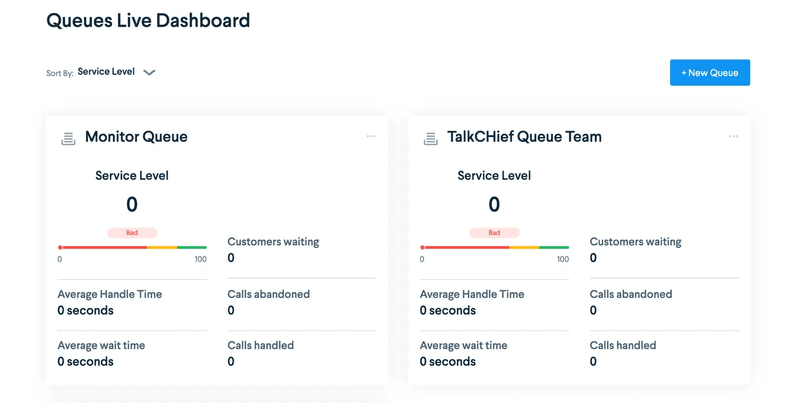
Typical queue configurations include:
- Routing calls by department or team
- Distributing calls based on availability
- Prioritising sales queues over general inquiries
- Managing overflow during peak hours
This structure helps sales teams stay responsive without adding unnecessary complexity.
VoIP Call Queue Management for Sales Teams
Sales teams operate under constant pressure to respond quickly and professionally, which is why VoIP call queue management is essential for handling inbound sales calls at scale. Poor call handling can directly impact conversion rates and brand perception.
Effective VoIP queue management enables sales teams to:
- Reduce missed inbound sales calls
- Shorten wait times during high-volume periods
- Ensure prospects reach the correct sales team
- Maintain a consistent experience across regions
Instead of relying on manual call transfers, queues create predictability and scalability.
Sales Call Routing That Supports Growth
As sales organizations grow, call volume and complexity increase. VoIP queues make it possible to scale without chaos. With structured VoIP call queue management, sales leaders can scale call handling without increasing missed calls or operational complexity.
Common sales routing scenarios include:
- New leads routed to an inbound sales queue
- Existing customers routed to account managers
- Regional routing based on business hours
- Overflow routing to backup teams
Cloud VoIP platforms like TalkChief allow teams to configure these rules centrally, giving sales leaders visibility and control without relying on technical teams.
Real-World Use Cases
Inbound Sales Calls
Calls from website forms or ads are routed directly to a dedicated sales queue, reducing response time.
Peak Traffic Management
When call volume spikes, queues prevent dropped calls and distribute traffic evenly.
Multi-Team Sales Structures
Different queues for SDRs, closers, or enterprise sales ensure calls reach the right expertise level.
After-Hours Handling
Calls can be queued, forwarded, or routed to voicemail based on business hours.
VoIP call queue management
Measuring Performance with VoIP Queues
Call queues are not just about routing—they provide insight. Industry best practices around call handling and queue performance are also reflected in guidance published by Ofcom, which outlines standards for business phone systems and call management.
Sales leaders can track:
- Queue wait times
- Abandoned calls
- Calls answered per team
- Call distribution by time of day
These metrics help identify bottlenecks and optimize staffing and schedules.
Final Thoughts
Sales success depends on responsiveness and structure. VoIP call queue management gives businesses the tools to handle inbound sales calls professionally, consistently, and at scale.
With the right queue setup, VoIP becomes more than a phone system—it becomes a foundation for sales performance and operational efficiency.Final Thoughts
Sales teams no longer need more calls—they need better calls.
As platforms like TalkChief continue to evolve, VoIP will play an increasingly strategic role in how businesses sell, scale, and compete.
Want to hear more? Les get started!



Empower your sales team with outbound sales tools designed to streamline processes and boost efficiency. These tools automate repetitive tasks, enabling your team to focus on closing deals and driving revenue. Discover how integrating these solutions can transform your sales strategy and give you a competitive edge.

Advanced time conditions turn VoIP routing into a strategic advantage—automating multi-time-zone coverage, shift handoffs, after-hours lead capture, and holiday logic to reduce missed calls, shorten wait times, and boost customer experience without adding headcount.
Just one more step to make your perfect choice. Click either button below to get started.


